

PANCKOO
Central Venous Catheter and Regional Anesthesia Ultrasound Training Models (Hand Pump)
Central Venous Catheter and Regional Anesthesia Ultrasound Training Models (Hand Pump)
Couldn't load pickup availability
Product No.: PC-BPE007.04
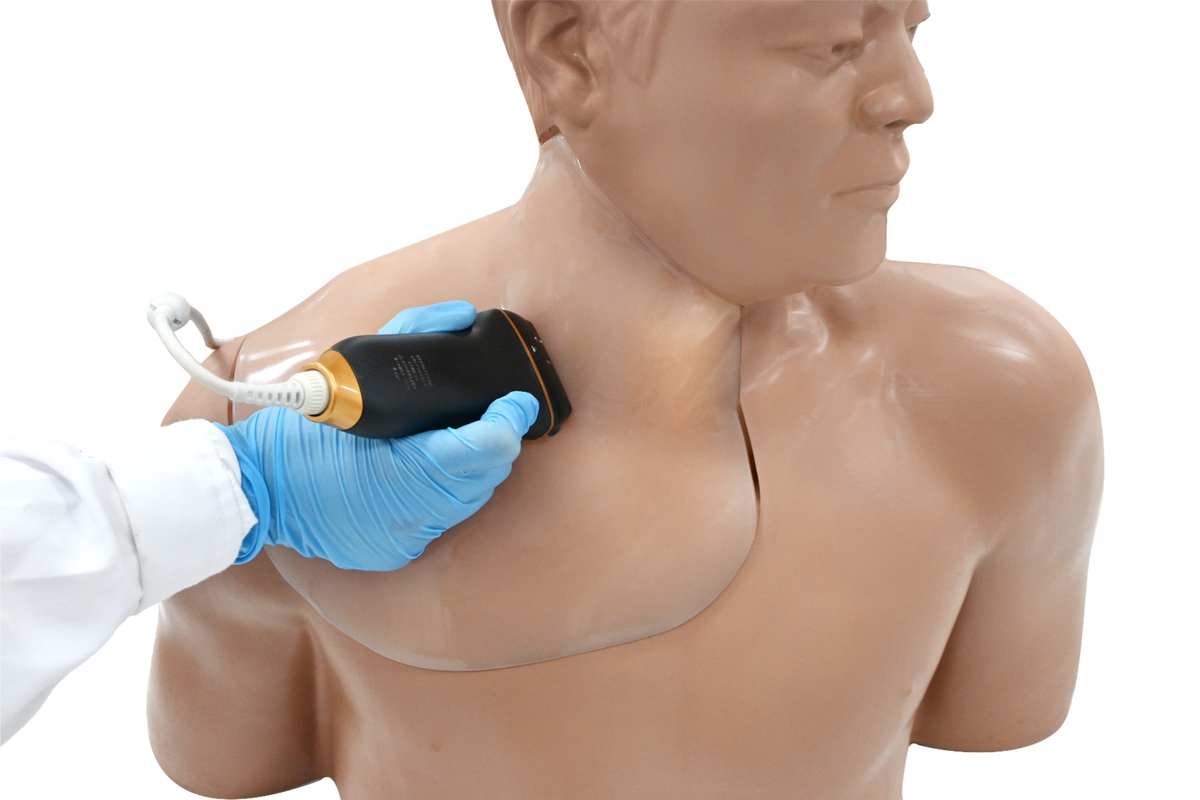
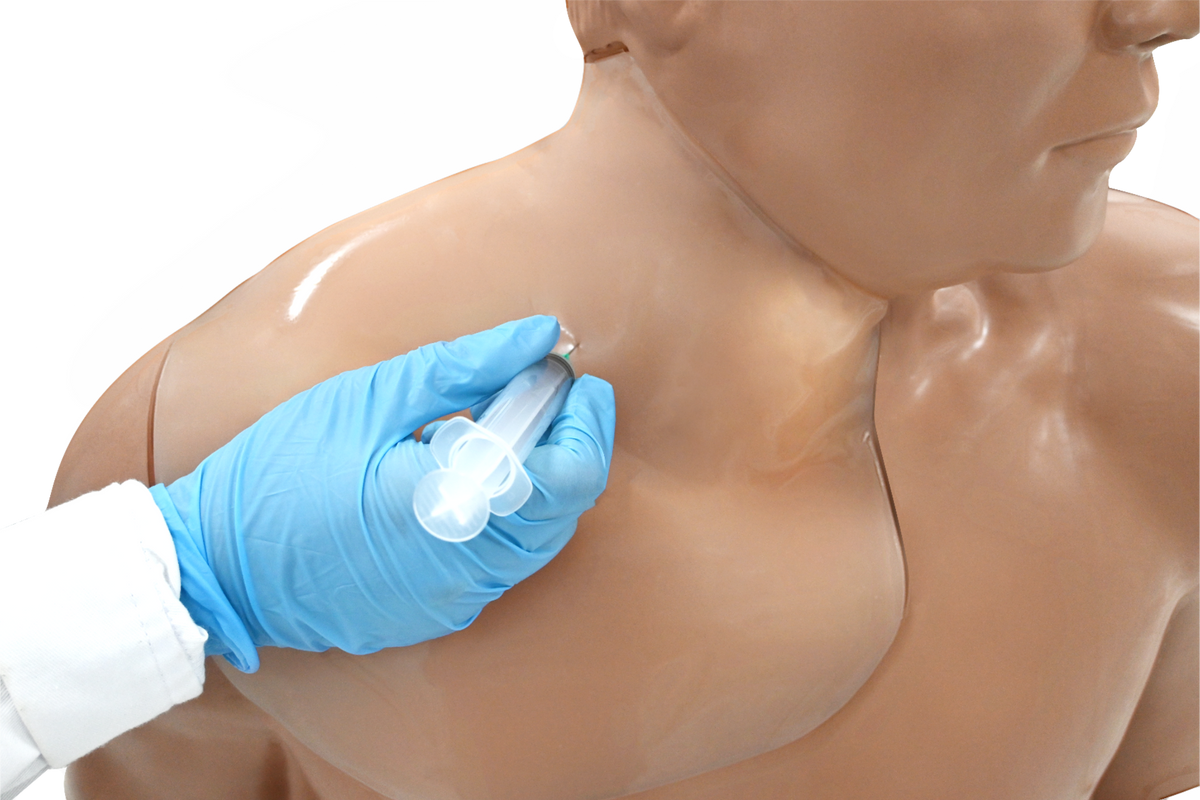
The model is designed based on the real anatomical structure and data of adult males, featuring precise surface anatomical structures and Built-in neck blood vessels and brachial plexus branches in the neck. It simulates the ultrasound imaging characteristics of real human tissue, allowing the internal structures of the model to be seen under real ultrasound, providing a practical platform for ultrasound teaching. It supports the use of clinical ultrasound probes for examination, measurement, and guidance of needle insertion of the brachial plexus and neck vessels, meeting the training needs for the complete operational procedures of brachial plexus block and central venous catheterization under blind or ultrasound-guided conditions.
Features
1. The model is designed based on real adult male anatomical data, representing a male upper body model with a head rotation to the left, featuring realistic external appearance and precise internal anatomical structures.
2. It simulates the ultrasonographic characteristics of real human tissues, capable of displaying realistic ultrasound images of anatomical structures such as the brachial plexus and neck vessels on any ultrasound device. It allows for complete procedural training of blind puncture and ultrasound-guided brachial plexus block as well as ultrasound-guided central venous puncture.
3. The model contains precise vascular pathways on the right side, including the internal jugular vein, carotid artery, subclavian artery, and subclavian vein, as well as anatomical landmarks such as the manubrium, clavicle, and trachea. The external appearance with the head turned to the left clearly shows the surface landmarks of the sternocleidomastoid muscle, allowing for complete procedural training of blind insertion and ultrasound-guided central venous puncture of the internal jugular and subclavian veins based on surface landmarks.
4. The model has a high degree of vascular simulation, with arterial pulsation simulated by pressing an arterial pump, allowing palpation of the vessel pulsation on the body surface. When applying ultrasound, the arterial cross-section shows pulsation, and the arterial vessels are not flattened by the ultrasound probe, while the veins can be flattened. It allows for training in the identification of arteries and veins. The model's arteries are filled with red simulated blood, and the veins with blue simulated blood; successful puncture allows for the withdrawal of simulated blood.
5. The model includes the right brachial plexus, comprising roots C5-C8, T1, with the nerve roots converging into trunks, extending into fascicles, bundles, and branches, featuring precise anatomical structures of the brachial plexus branches. The brachial plexus runs alongside adjacent blood vessels, supporting ultrasound-guided brachial plexus block anesthesia training through various approaches including the interscalene, supraclavicular, and infraclavicular approaches.
6. During the puncture process, simulated anesthetic can be injected, and the diffusion process of the anesthetic can be observed, facilitating confirmation of the needle tip position under ultrasound and performing the complete anesthesia procedure.
7. It supports ultrasound examination through the internal jugular and subclavian veins, allowing for complete simulation training of the central venous puncture procedure, including needle puncture, guide wire insertion, and central venous catheter placement, with a realistic puncture feel experience.
8. The model includes obvious surface landmarks such as the trachea, manubrium, clavicle, and sternocleidomastoid muscle, allowing for training of the complete central venous puncture and catheterization procedure through blind puncture.
Materials
Materials
Shipping & Returns
Shipping & Returns
Free Shipping
Care Instructions
Care Instructions
Cleaning
- Clean the simulator with a damp cloth, using warm water and neutral detergent. Do not use any abrasive cleaning agents or materials.
- Allow trainer to completely dry before storing.
- Keep away from sunshine.
Share